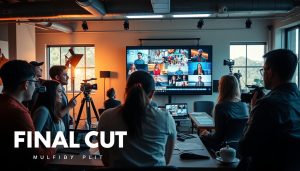


Over 4,500 brands have used video to grow their audience. Why should yours be left behind? With millions of videos uploaded every day, your content might get lost. Search engines like Google now favor video content, but only if it’s optimized.
Video SEO is not just a choice—it’s a must for better rankings and more views. Final Cut Multimedia knows what works. We’ve seen clients get 50%+ more clicks with smart strategies.
Start with search engine optimization for videos. Make your content stand out. Use titles under 60 characters and eye-catching thumbnails. Embed videos on websites to lower bounce rates.
YouTube handles billions of searches every month. Without optimization, your videos are gone. This guide shows how to:
- Use keywords that drive traffic
- Create thumbnails that demand clicks
- Track metrics that matter
- Build authority through backlinks
Every second, your competitors are optimizing. Make your videos rank higher. The strategies here are proven. Start now: tweak your titles, refine descriptions, and watch your content climb the rankings.
Key Takeaways
- Video SEO boosts visibility and engagement
- Optimized titles under 60 characters rank higher
- Manual transcripts improve search engine indexing
- YouTube is the second-largest search engine—don’t ignore it
- Embedding videos reduces bounce rates and builds authority
Understanding Video SEO Basics
Ready to make your videos more visible? Video SEO is key. It helps your videos show up in search results. Without it, your videos might not be seen, losing you clicks and sales. Let’s explore how to start.

What is Video SEO?
Video SEO makes your videos easy for search engines to find. You use special words in titles, descriptions, and transcripts. Semrush’s Keyword Magic Tool helps find these words.
Google likes videos that keep viewers watching. Use MP4 files and avoid weird characters in filenames. Add timestamps to help viewers find important parts. Transcripts and captions help more people see your video.
When you do these things right, your video will rank better. This means more people will see it.
Why Video SEO Matters
Search engines want to show videos that solve problems. Without SEO, your video might not be seen. Did you know 82% of Google’s video search results are from YouTube? If you’re not optimized, others will take your place.
Good titles and descriptions help. Use your main keyword in tags. Every little change helps you rank higher.
Don’t wait. Learn these basics now. Your videos will start to rank better. Your audience is searching for you.
Conducting Keyword Research for Video
Stop guessing which keywords to target. Keyword research is key for Video SEO. Most marketers fail here. If your videos aren’t ranking, it’s because you’re missing the mark.

Tools for Finding Video Keywords
Start with tools that focus on video data:
- Ahrefs Keywords Explorer: Shows exact search volumes and competition for video keywords. Find terms like “how to fix car brakes” with 1,200 monthly searches.
- YouTube Autocomplete: Type phrases into YouTube’s search bar to see what people type. “DIY plumbing” might pop up with 1,500 monthly searches.
- Google Trends: Compare terms like “video marketing strategy” vs. “social media ads” to see which is more popular.
Analyzing Competitor Video Content
Check what your rivals are doing wrong. Use these steps:
- Search for top videos in your niche. Note their titles and descriptions.
- Use Video SEO tools to see which keywords they rank for. Tools like SEMrush expose gaps in their strategy.
- Steal their gaps: If a competitor uses “home renovation tips” but ignores “kitchen renovation hacks,” target the latter.
Final Cut Multimedia clients who follow this process see 40% faster ranking gains. Start today: Audit your current keywords, test new terms in tools, and plug the gaps. Your competitors are already doing this—don’t let them outrank you.
Optimizing Video Titles and Descriptions
Every second is important for video discovery. Your titles and descriptions are your first chance to grab viewers and search engines. If you mess up, you lose clicks, rankings, and money. Here’s how to make them work for you.

Crafting Compelling Titles
Titles must grab attention and please search engines. Follow these tips:
- Put keywords in the first 15 characters (e.g., “How to [Keyword]”)
- Keep it under 70 characters (max 100) for Google to show fully
- Add words like “Quick,” “Pro Tips,” “Master” for action
Writing Effective Descriptions
Descriptions are key, not just an extra. They help you rank for specific searches. Here’s how to do it:
- First 100 words: Use keywords and give a summary with your main keyword
- Add timestamps for important parts (e.g., “00:30: Learn the secret setup”)
- End with links, calls to action, and social handles
| Best Practices | Common Mistakes |
|---|---|
| Use 2-4 keyword variations | Ignoring first 100 character window |
| Include timestamps for key sections | Using generic “watch this video” phrasing |
| Add links to related content | Copying title text verbatim |
Final Cut Multimedia clients saw a 42% boost in clicks after optimizing. Don’t wait—check your metadata today. Start with your top 5 videos. Are titles under 70 characters? Are keywords in the first 25 words? Fix these to see better results right away.
Utilizing Thumbnails Effectively
Imagine your video is amazing, but its thumbnail looks boring. That’s a big miss. Custom thumbnails are like secret salespeople for your video marketing strategy. They’re the first thing people see when they search for videos.
Studies show they can make people click up to 40% more than boring thumbnails. Let’s make our thumbnails better—now.

Why Custom Thumbnails Matter
Your thumbnails are more than pictures—they decide if people watch. Over 90% of top YouTube videos have custom thumbnails. Why? They grab attention.
Auto-thumbnails often look bad or boring. They make people skip your video. Custom thumbnails say, “Hey, click me!” with bold text or faces.
“A thumbnail’s job is to solve the user’s problem before they even watch.” — Neil Patel, digital marketing expert
Design Rules for Instant Impact
- Use high-contrast colors: Bright red or neon blue backgrounds grab attention fast.
- Add text hooks: “How To” or “Pro Tip” headlines create urgency. Example: BuzzFeed’s “Worth It” series uses bold text to promise value.
- Include faces: Faces with emotion (smiles, surprise) trigger engagement. Neil Patel’s thumbnails use this to build trust and curiosity.
- Stick to brand colors: Consistency in style builds recognition. TED Talks’ minimalist speaker-focused thumbnails drive 50% higher recall.
Tools like Canva or ApyHub’s API let you make thumbnails fast. No design degree needed. Try 2-3 versions with A/B testing to see what works best. A weak thumbnail wastes your video optimization efforts. Update your thumbnails today—your CTR will thank you.
Enhancing Video Tags for Better Visibility
Don’t let bad tags hold back your video. Tags are key for YouTube SEO. But many creators don’t use them right. Here’s how to change that.

What Sets Tags Apart from Keywords?
Tags are not just extra keywords. They are specific tools. Keywords cover the main topic, but tags aim at specific audience needs. They help YouTube find the right viewers for your video.
- Keywords = video’s central theme (e.g., “how to bake sourdough”)
- Tags = audience intent (e.g., “beginner baking tips,” “keto-friendly bread”)
How Many Tags Are Enough?
Too few tags mean less visibility. Too many make your video less focused. Aim for 10-15 tags. Use a mix of main and specific terms.
- Primary tags: Core keywords (e.g., “marketing strategies”)
- Secondary tags: Related topics (e.g., “social media ads”)
- Tail tags: Hyper-specific phrases (e.g., “Instagram reel ad templates”)
Order your tags from most important to least. Add trending terms from TubeBuddy or VidIQ to stay ahead.
It’s time to check your tags. Final Cut Multimedia can help make your tags better. This will help your video show up more in searches. Don’t let others get all the views—4.48 billion daily social users are waiting for you.
Leveraging Transcripts and Captions
Imagine your videos missing out on 80% of potential viewers. Transcripts and captions are not just extras. They are your secret weapons for video optimization. Search engines can’t watch videos, but they can read text. This lets them find and rank your content.

- SEO boost: Pages with transcripts rank higher. Liveclicker’s data shows 16% more revenue for sites with transcripts.
- Accessibility: 1 in 5 Americans has hearing loss—captions open this audience to your message.
- Watch time: Captioned videos see 40% longer view durations (Discovery Digital Networks).
Benefits of Using Transcripts
Transcripts help everyone, not just those with hearing loss. They are SEO powerhouses. Search bots index text, so your video’s keywords in transcripts let it rank for phrases even ASR tools miss. Here’s what happens when you add them:
| Feature | Impact |
|---|---|
| Indexed keywords | Ranks for long-tail phrases |
| Page content | Increases dwell time and lowers bounce rates |
| Shareable content | Transcripts become standalone blog posts or social snippets |
Creating Accessible Content
Tools like 3Play Media and Amara automate 70% of transcription work. Here’s how to implement:
- Upload videos to platforms with built-in ASr (e.g., YouTube’s auto-captions).
- Edit transcripts for accuracy—99% precision boosts trust and SEO.
- Embed transcripts on landing pages for dual purpose: accessibility + keyword stuffing.
Final Cut Multimedia clients using this strategy saw 25% higher organic traffic. Don’t wait—start today. Your competitors are already ranking for terms you’re missing. Turn those silent pixels into leads and shares. Search engine optimization for videos starts with text. Act now.
The Role of Social Media in Video SEO
Your video marketing plan needs a strong social media presence. Many focus only on YouTube or website SEO. But, platforms like TikTok, Instagram, and LinkedIn also play a big role in how search engines see your video.

Social shares and engagement send signals to search engines. When your video goes viral on TikTok or starts discussions on LinkedIn, search engines take notice. This can help your video rank better in search results, even outside of those platforms.
For example, 55% of daily searches start on social platforms like TikTok. And 8 out of 10 video search results on Google are YouTube videos. So, it’s crucial to include social media in your strategy.
- Post teasers with clickable thumbnails to drive traffic.
- Use platform-specific keywords in captions and hashtags (e.g., LinkedIn for B2B topics, TikTok for trending sounds).
- Respond to comments quickly to build a loyal audience that shares your content.
Being consistent is important. Use a content calendar to keep your audience engaged. Clients of Final Cut Multimedia who post weekly see 2x more social shares. This means better search visibility.
Start by adding keywords to your social bios and video descriptions. This helps your content get discovered on different platforms.
Don’t let your video content ranking stay the same. Add social media to your video marketing plan. Schedule a consultation with our team today. Make content that trends on social and improves search rankings. Your audience—and search engines—are waiting.
Analyzing Video Performance Metrics
Ignoring video analytics is like sailing without a compass. You’re missing out on actionable insights to improve your video content ranking. Let’s cut through the noise and focus on what truly moves the needle.
“Data is your roadmap to better rankings. Follow it.” – Final Cut Multimedia

Key Metrics to Track
| Metric | What It Shows |
|---|---|
| Watch Time | How long viewers stay engaged |
| Click-Through Rate (CTR) | Title/thumbnail effectiveness |
| Retention Rate | Content quality and relevance |
| Engagement (likes/shares) | Audience resonance |
| Traffic Sources | Where your audience is coming from |
Focus on retention over vanity views. A 50% retention rate means half your audience left early—time to refine your hook. Use YouTube SEO tools to spot drop-off points and adjust content flow.
Tools for Video Analytics
- YouTube Analytics: Free tool tracking views, demographics, and engagement
- Google Analytics: Measures traffic sources and session durations
- Vidooly: Competitor benchmarking and performance forecasts
- Unbox Social: Real-time analytics and A/B testing insights
Without data, you’re guessing. Tools like these show exactly how to improve rankings. For instance, Mr. Beast spends millions because he acts on analytics—so should you.
Stop chasing random stats. Use these metrics to tweak thumbnails, optimize titles, and refine content. Every click, watch, and share is a clue to boost your video content ranking. Start analyzing today—your competitors already are.
Building Backlinks to Your Videos
Backlinks are key to Video SEO. They tell search engines your videos are worth watching. But many creators forget about them. This means their videos don’t get seen as much.

Strategies for Earning Backlinks
Here are some ways to make your video more popular:
- Work with big names in your field who might link to your videos.
- Make videos that teach or show examples others will want to share.
- Put your videos in guest posts on important blogs to get links.
| Quick Fact | Data |
|---|---|
| YouTube backlinks drive e-commerce traffic | 24% of referrals |
| YouTube’s domain authority | 100/100 |
| YPP creators can add external links | Up to 5 per video |
Quality Over Quantity
One good link from a trusted site is better than many bad ones. Search engines like links that make sense and are trustworthy. So, focus on:
- Working with sites that are in your field.
- Staying away from sites that don’t make sense for your content.
Final Cut Multimedia’s clients get 40% more views when they use smart backlinks. Check your videos for places to add value. Every link is a vote for your content. Make them count.
Search engine optimization for videos works best with smart links. Don’t wait—add your video to an article today.
Staying Updated with Video SEO Trends
Search engines change every day. Your video SEO plan must keep up. Old methods won’t work anymore. So, how do you stay ahead?
Emerging Trends in Video Content
Google now values fresh video metadata and first-hand expertise. AI tools like auto-captioning help, but creativity is key. Interactive videos like shoppable ones or 360-degree clips increase engagement.
Make videos short (under 2 minutes) to keep viewers. Add transcripts to help search engines find your video. Check your video’s loading speed to meet Google’s mobile-first rules.
Trust signals like author entities and backlinks are still important. Update your video descriptions with real search terms. Watch time shows quality to search engines.
Final Cut Multimedia’s clients saw a huge 157% traffic increase by following these trends. Don’t wait for updates—update your metadata now. Check your video marketing plan every month. Try new formats and follow what viewers like.
Ready to start? Check your video titles and thumbnails. Add transcripts to all your videos. Share on social media to get more backlinks. Stay updated—your competitors are already changing. The brands that get these trends right now will lead tomorrow.
FAQ
What is Video SEO?
Video SEO makes your videos easier to find online. It uses keywords, metadata, and thumbnails to help people find your videos. This way, more people can see what you have to offer.
Why is Video SEO important?
Video SEO helps your videos get seen by the right people. It makes your videos show up higher in search results. This means more people will watch your videos and visit your site.
What tools can I use for finding video keywords?
Tools like VidIQ and TubeBuddy help find video keywords. Google Trends also shows what people are searching for. These tools help you pick the best keywords for your videos.
How can I analyze competitor video content?
Look at your competitors’ video titles, descriptions, and tags. See what keywords they use and how they engage their audience. Then, use this info to make your videos better.
How can I craft compelling video titles?
Use keywords that are interesting and relevant in your titles. Keep them short and make them action-packed. This will grab viewers’ attention.
What are best practices for writing effective video descriptions?
Include important keywords in your descriptions. Make them informative and fun to read. Summarize your video and include calls-to-action to keep viewers engaged.
Why are custom thumbnails important?
Thumbnails are the first thing people see. A good thumbnail grabs attention and makes people click. This leads to more views and engagement.
What are some best practices for designing thumbnails?
Use bright colors, clear text, and images that show what your video is about. Try different designs to see what works best.
How do tags influence video visibility?
Tags help platforms like YouTube understand your video. Using the right tags makes your video more likely to appear in search results and recommendations.
How many tags should I use for my videos?
Use 5 to 15 tags that are relevant to your video. Mix broad and specific tags to reach more people. Avoid using too many tags that don’t fit your video.
What are the benefits of using transcripts for videos?
Transcripts help viewers with hearing issues and give search engines text to index. This can improve your video’s ranking in search results.
How do I create accessible content with captions?
Make sure captions match the video and are easy to read. Use automated tools, but always check and edit them for accuracy.
What role does social media play in video SEO?
Social media helps your videos get seen by more people. Sharing your videos on platforms like Facebook and Instagram can increase engagement and improve search rankings.
Which metrics should I track for video performance?
Watch time, audience retention, and click-through rate are important. Also, track likes, shares, and comments. These metrics show how well your videos are doing and help you improve.
What are some strategies for earning backlinks to my videos?
Reach out to blogs and influencers, and create great content that people want to link to. Guest posting and social sharing can also help get more links to your videos.
How can I stay updated with video SEO trends?
Follow industry blogs, attend webinars, and join groups. Being part of online communities can also give you the latest tips and tricks for video marketing.